
Regenerative Cocoa Farming: What is Agroforestry?
Our work begins long before cocoa becomes chocolate.
At Islands, on our farms in St Vincent, we work exclusively within an agroforestry model that sits at the heart of regenerative agriculture. To celebrate Regenuary, we wanted to get to the roots of what agroforestry really means.
But what exactly is an agroforestry farming model, and how is Islands Chocolate regenerative grown cocoa?
AGROFORESTRY
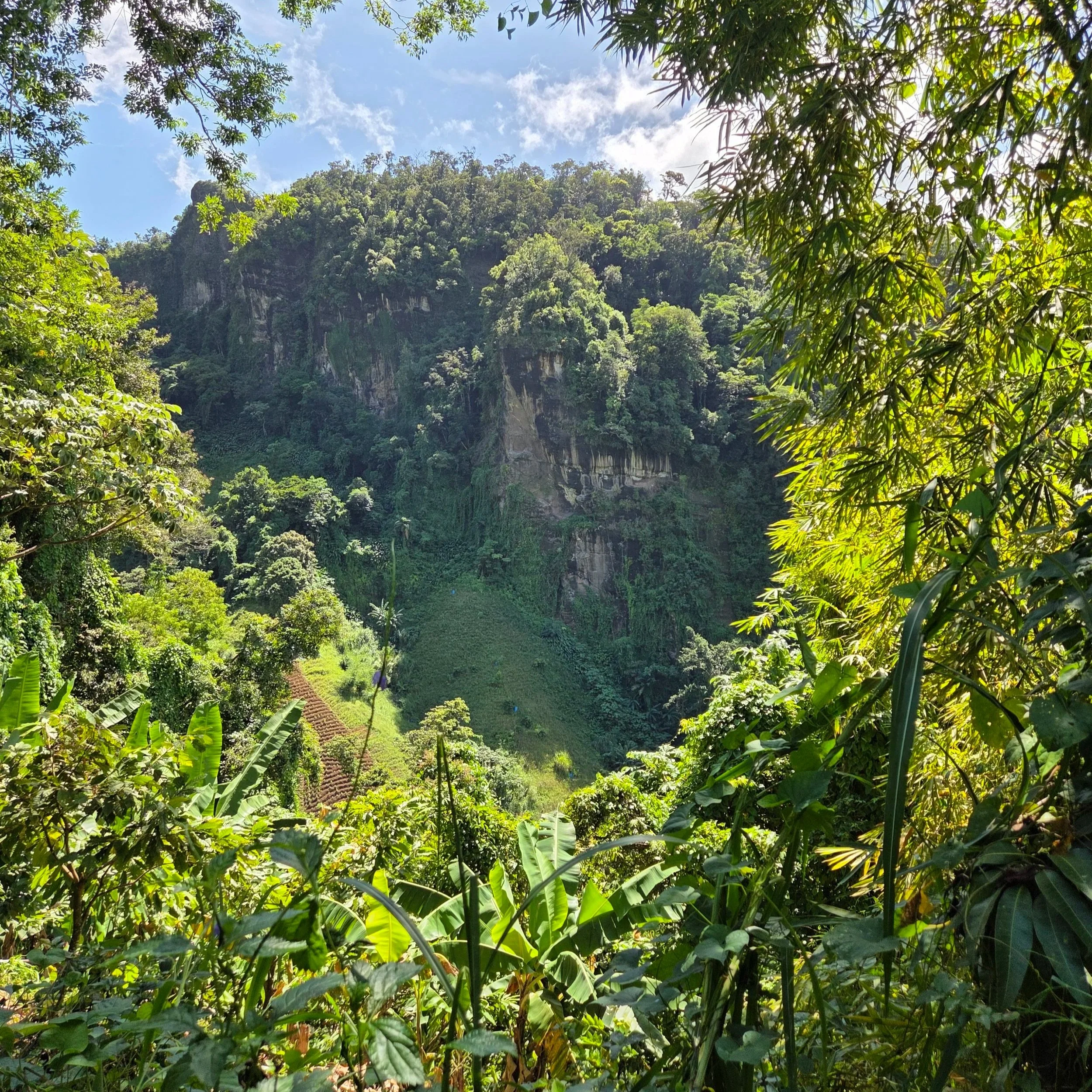
Agroforestry farming is a way of managing farmland where trees and plants are intentionally integrated with crops or livestock on the same area of land. This supports biodiversity, stabilises soils, improves nutrient cycling, encourages carbon-sequestration and creates a more climate-resilient environment for farmers whose livelihoods depend on healthy land.
REGENERATIVE AGRICULTURE
Regenerative agriculture is farming system based on nurturing and improving soil health biodiversity and ecosystem function, in ways such as maintaining soil cover, limiting soil disturbance, keeping living roots in soil while fostering agricultural diversity.
As you can see, agroforestry sits as a key tool within regenerative farming.
Whilst certifications such as ‘Organic’ and ‘Fairtrade’ are meticulously regulated, ‘agroforestry’ and ‘regenerative farming’ have no governing body or regulation of use. This no official certification, it’s down to brands to explain and educate on how and why their farming is regenerative.
So let’s explain.
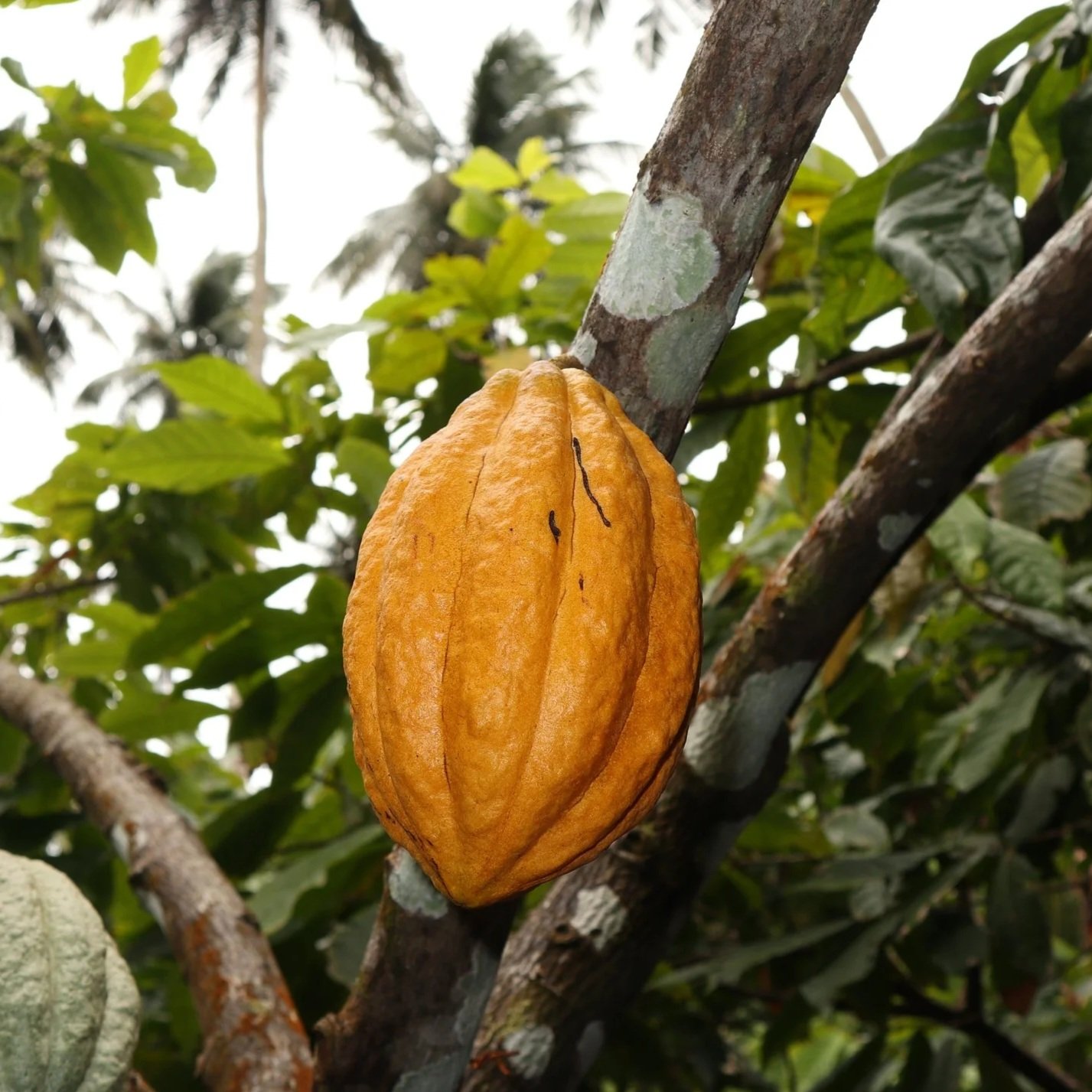
On St Vincent, we grow cocoa on over 500 acres of farm land. Some of this land is managed by a handful of smallholders, with the rest managed directly by our sister company, the St Vincent Cocoa Company.
Across these 500 acres, we exclusively farm within a regenerative, agroforestry model. Agroforestry mimics natural forest systems. By integrating cocoa within a diverse canopy, land retains moisture, supports biodiversity, reduces erosion and becomes more resilient to climate extremes – producing healthier cocoa trees and better-quality beans.
So, alongside our coco trees we predominantly grow Mahogony, Coconut, Banana, and Gliricidia, as well as a variety of smaller shrubs for ground cover.
WHY MAHOGANY?
Cocoa is an ‘understory’ tree, meaning it thrives within forest environments under dappled light. In order to provide this environment, we grow cover crops. Mahogany grows tall and strong, acting as a perfect cover crop whilst also growing strong roots to improve soil structure.
The tall, leafy canopy it offers attracts birds and predators which supports ecosystems and naturally manages pests.
WHY COCONUT?
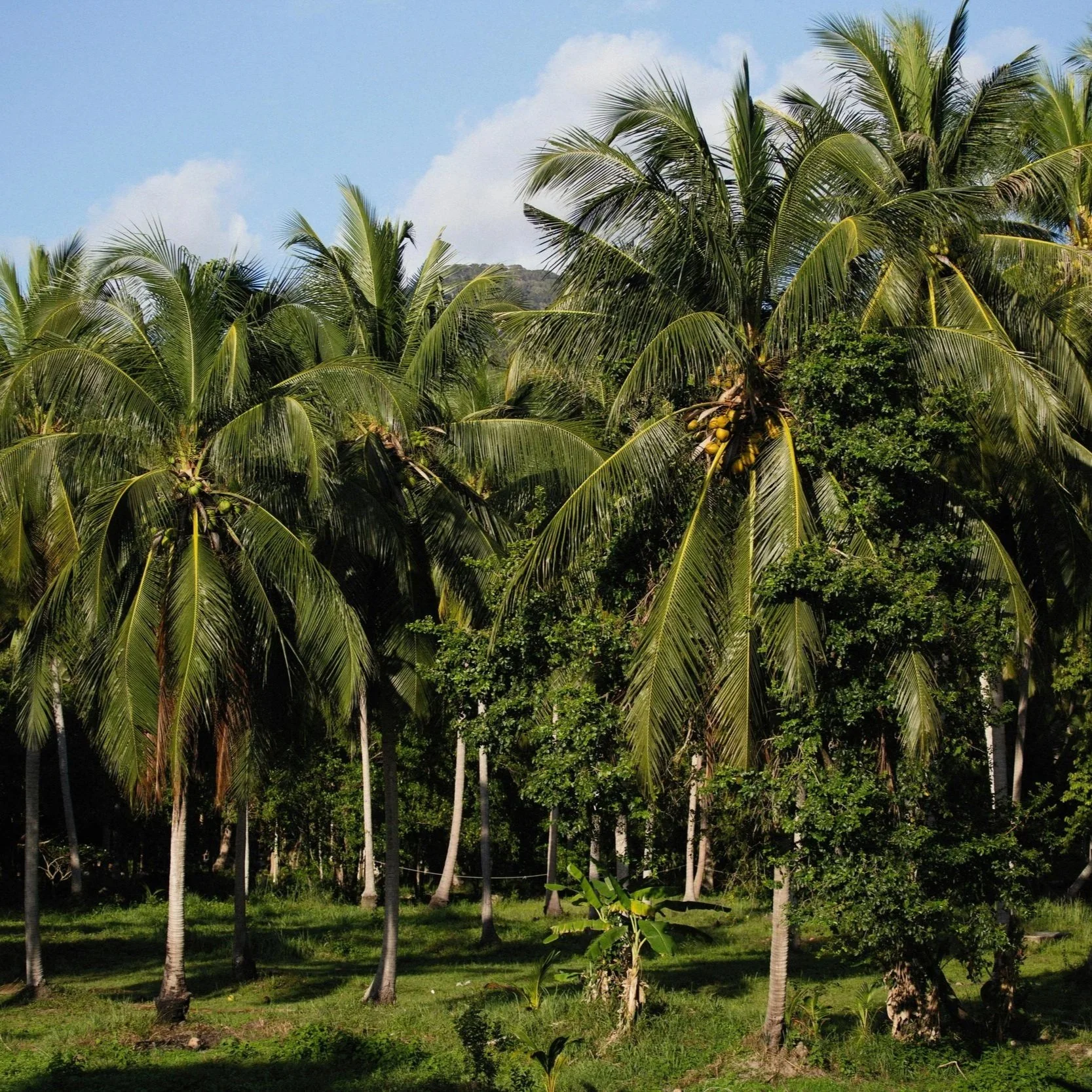
Coconut trees grow taller than cacao and filter sunlight through their palms, creating the dappled light that cocoa thrives under, whilst their roots grow deeper than cacao, improving soil structure.
Coconut trees provide the perfect habitat for Black Ants nests, and in turn these ants feed on common cacao pests, again supporting a natural pest management system.
WHY BANANA?
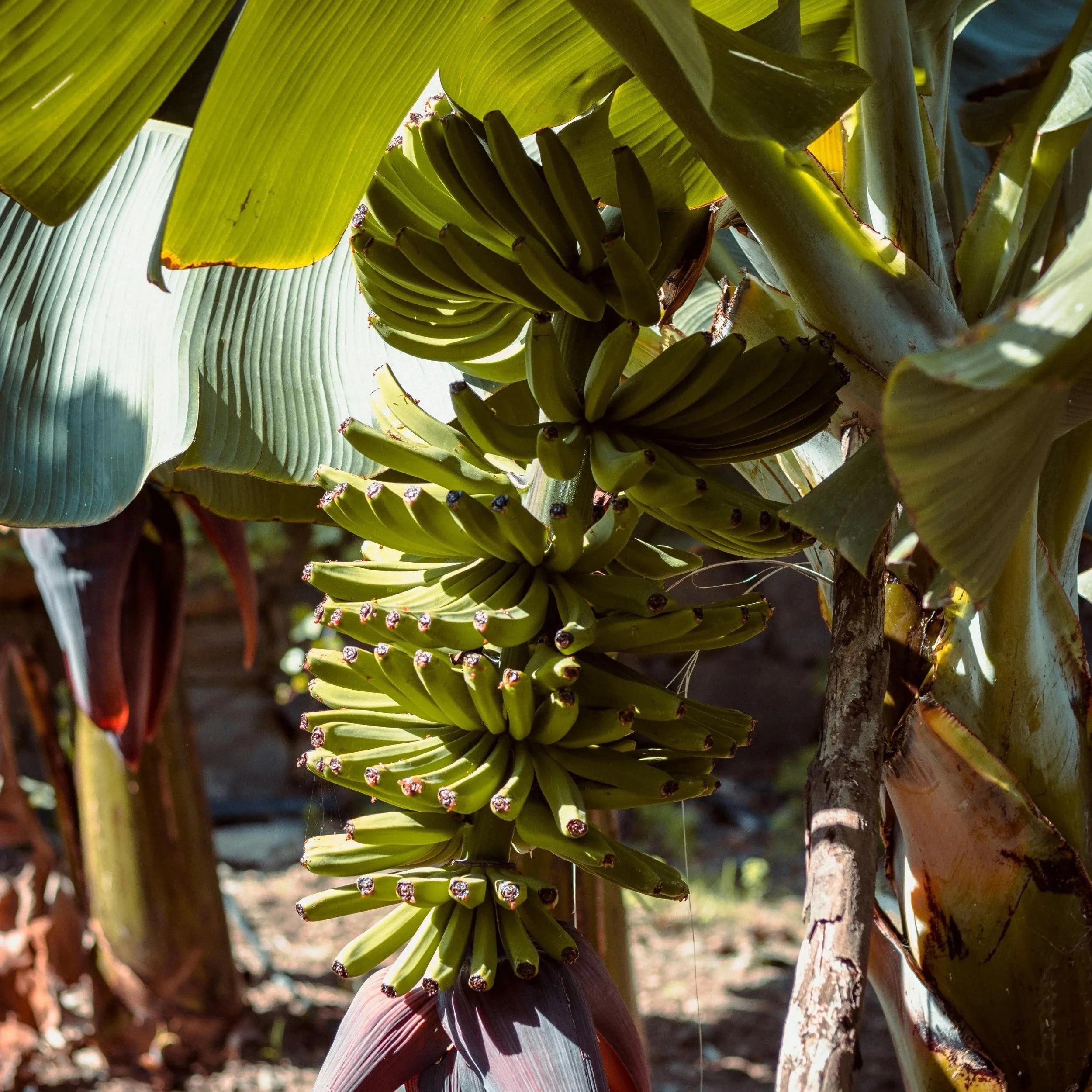
Banana trees offer several benefits when grown alongside cocoa trees in an agroforestry model. When cocoa trees are young, they are more fragile and sensitive to direct sunlight. Banana trees provide shade and much-needed wind protection during their infancy, as well as improving soil health through intercropping and moisture retention – ideal conditions for cocoa roots!
During our process on St Vincent, we use a traditional method of fermentation. Banana leaves are crucial for creating a natural, controlled micro-environment for consistent fermentation – giving our cocoa its distinctive flavour.
WHY GLIRICIDIA?
Gliricidia is often referred to as the ‘mother of cacao’ is it enriches the soil through nitrogen fixation. Nitrogen fixation is when a plant turns otherwise unusable nitrogen in the atmosphere into a usable form like ammonia or nitrates, which plants need to grow. When pruned, the leave decompose naturally and release valuable nutrients like phosphorus, potassium, calcium, and magnesium directly into the soil as a high-quality green manure, acting as our cacaos personal fertiliser.
Again, it offers excellent pest repellent properties, with a pungent smell which deters many harmful insects and bugs, and leaves and bark which act as a natural rat poison.
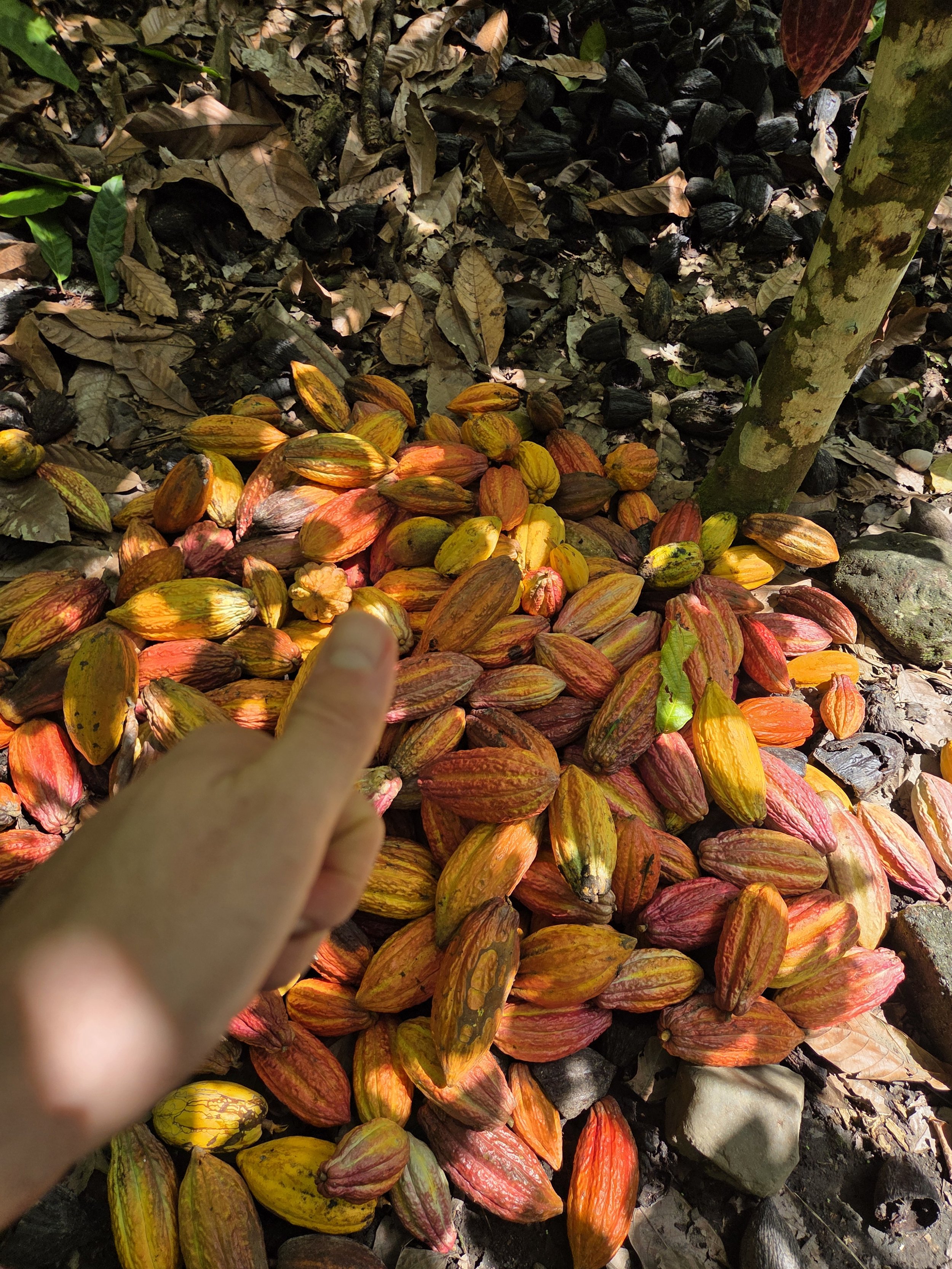
OUR +1 MILLION TREE CARBON SINK
Across each acre of farmland, we have grown approximately 440 cocoa trees, 88 mahogany trees, 12 coconut trees and 1,500 Gliricidia trees. Based on the estimated carbon sequestration of each of these species, our 500 acres of farmland – or 1,020,000 trees - sequesters around 8,510 metric tons of CO2 per year.
WHAT DOES THIS MEAN FOR ISLANDS CHOCOLATE?
It means our cocoa is grown at an optimal speed for sustainability and long-term flavour development. In mainstream cocoa farming, cocoa is forced into direct sunlight to maximise yields. This method of farming in completely unsustainable, reducing their productivity from 25-30 years to 3-7 years. Cocoa trees are understood to create the best flavour beans from 10-40 years of age. Between 3-6 years, the tree is still young and the cocoa produced tends to be less developed in flavour. By farming cocoa in accordance with its natural habitat, we ensure the lifespan of the cocoa reaches and thrives within this optimum flavour period.
Better farming = Better flavour.